THE BILL IS A BETRAYAL AND EVEN THEIR OWN ARE PUSHING BACK
Zimbabwe is witnessing a dangerous turning point, not only in the battle over Constitutional Amendment Bill Number 3, but in the internal fractures now clearly visible within the ruling elite. What is unfolding is no longer a simple policy disagreement. It is a struggle over the future of the nation, the meaning of the liberation struggle, and whether power belongs to the people or to a shrinking circle determined to hold on at all costs.
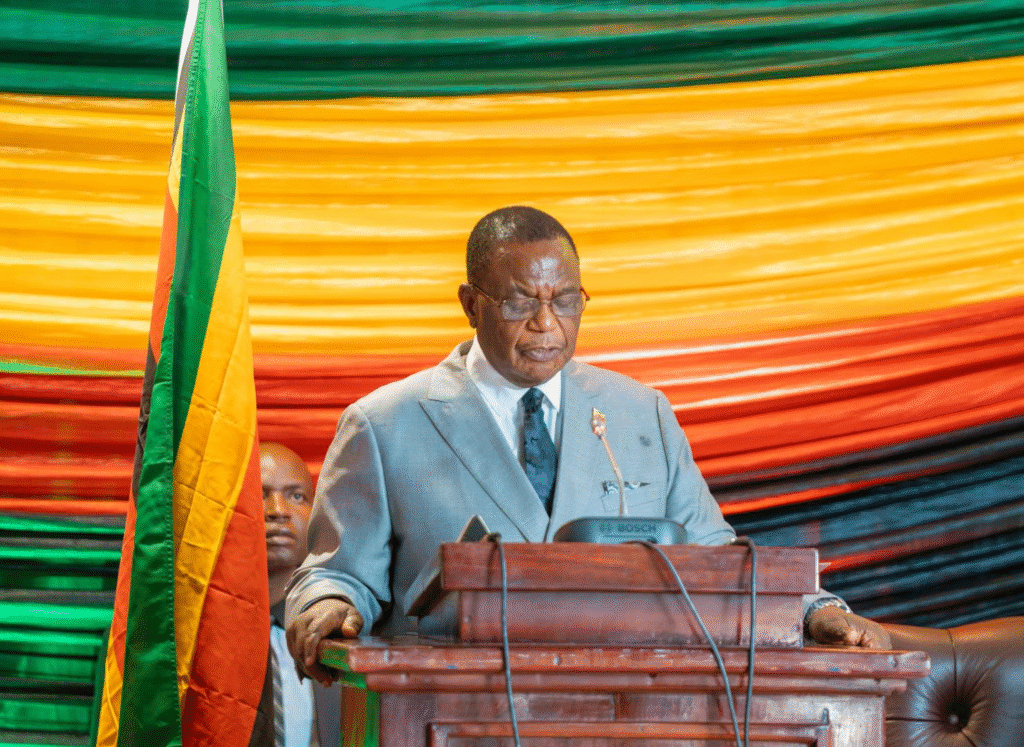
Vice President Constantino Chiwenga has quietly but deliberately begun repositioning himself against President Emmerson Mnangagwa’s attempt to extend his rule to 2030. While this is framed as a succession battle within ZANU PF, it is also something more significant. It is an acknowledgment, even from within the system, that the current path is unsustainable and politically reckless.
Chiwenga’s messaging has been calculated and strategic. He is grounding his argument in the very foundation that ZANU PF has always used to justify its rule. The liberation struggle, he reminds us, was fought for land and for the principle of one man one vote. This is not accidental language. It directly challenges the core of the proposed amendments, particularly the shift away from direct presidential elections to a system where the president is chosen through parliament.
On paper, defenders of the Bill argue that such systems exist elsewhere. They point to countries where presidents are elected indirectly and claim that this does not remove universal suffrage. But this argument deliberately ignores Zimbabwe’s political reality. In a system where parliament is already heavily controlled, where recalls have been weaponised, and where independent representation is constantly undermined, transferring the power to elect a president from citizens to MPs is not a neutral reform. It is a consolidation of power.
Chiwenga’s insistence on maintaining direct presidential elections is therefore not just a technical preference. It is a recognition that removing the people from the final act of choosing their leader weakens democratic accountability. It reduces citizens from active participants to passive observers. In a country with Zimbabwe’s history, that is not reform. It is regression.
Equally significant is his call for a referendum. This has become one of the most contested aspects of the debate. ZANU PF argues that no referendum is necessary because term limits are not being removed, only the electoral cycle is being adjusted. This is a misleading argument. Extending a leader’s time in office beyond the expected constitutional limit, while simultaneously restructuring how that leader is chosen, fundamentally alters the political contract between the state and its citizens. Such changes demand direct public consent.
The refusal to subject this Bill to a referendum reveals a deeper truth. There is a lack of confidence that the people would approve it. If the amendments were truly in the national interest, there would be no fear in putting them to a vote. Avoiding that process suggests that the outcome is already known, and that it would not favour those pushing the changes.
The historical irony is impossible to ignore. Zimbabwe began its independence journey with a parliamentary system under the Lancaster House constitution, where executive power was not concentrated in a single individual. The ceremonial presidency of Canaan Banana and the role of a prime minister reflected a different balance of power. That changed in 1987 when constitutional amendments created an executive presidency under Robert Mugabe, centralising authority and weakening institutional checks.
What is now being proposed is presented as a technical adjustment, even a return to an earlier system. In reality, it is neither a genuine restoration nor a democratic evolution. It is a calculated restructuring designed to extend Mnangagwa’s stay in power while reshaping the system in ways that reduce direct public influence.
Even more telling is that resistance to this project is no longer coming only from opposition parties or civil society. It is emerging from within the ruling establishment itself. While Chiwenga is not a champion of democratic reform in any pure sense, his current position reflects a direction that aligns more closely with preserving at least some elements of public participation than the path being pursued by Mnangagwa.
This does not make him a hero. But it does highlight the extent to which this Bill has crossed a line. When even those within the system begin to push back, it signals that the proposal is not just controversial. It is dangerous.
Zimbabwe now stands at a crossroads. The choice is not simply between two political figures. It is between deepening authoritarian control or defending the principle that power ultimately belongs to the people. Constitutional Amendment Bill Number 3 is not a neutral reform. It is a direct threat to that principle, and it must be resisted with clarity and determination.