WHEN POWER TURNS INWARD THE SYSTEM BEGINS TO BREAK
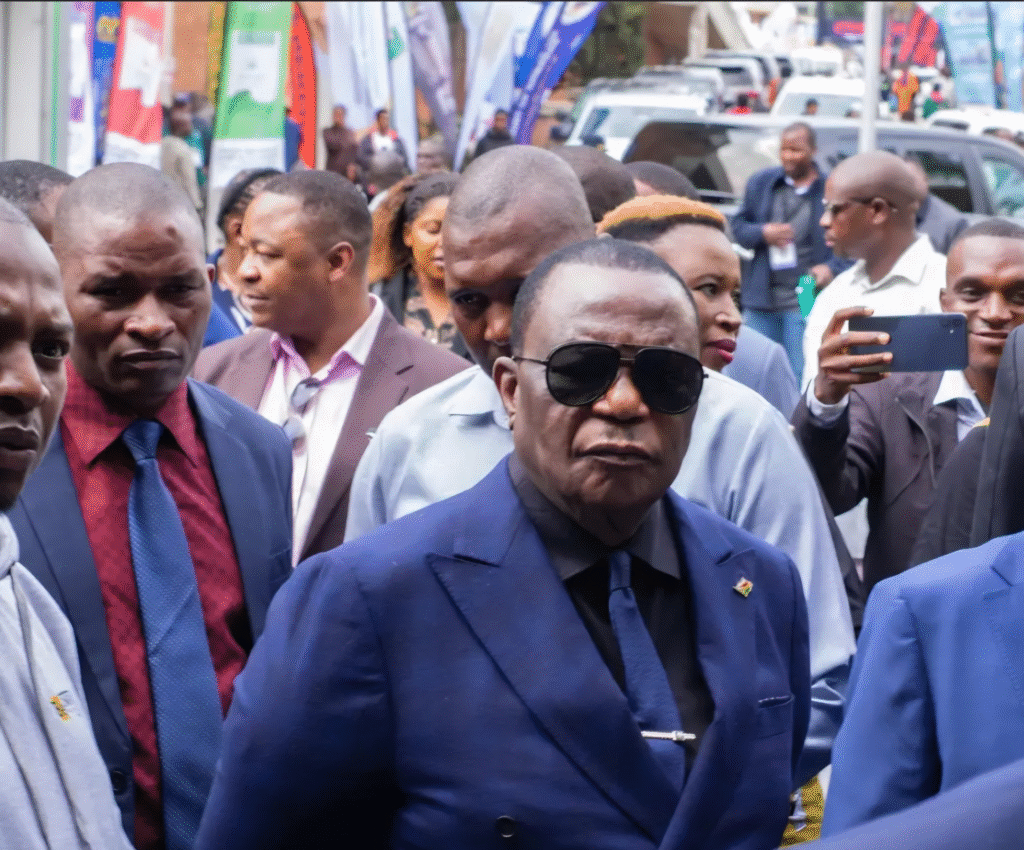
Zimbabwe is entering a critical moment where the battle over constitutional amendments is no longer confined to parliament or political parties. It has now spilled into the courts, the military establishment, and the very foundations of the state. Six war veterans have already approached the Constitutional Court in an attempt to block the proposed changes, signaling that resistance is no longer coming only from opposition benches but from those who once formed the backbone of the ruling order.
At the heart of this confrontation lies a fundamental question that defines any democracy. Can parliament alone rewrite the rules of power, or must the people themselves decide through a national referendum. This is not a technical legal debate. It is a struggle over sovereignty itself. The 2013 constitution was endorsed by Zimbabweans through a referendum, giving it both legal and moral authority. To now alter it without returning to the people is to undermine that very foundation.
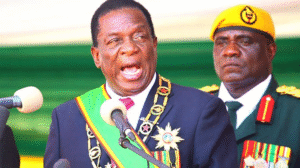
ZANU PF, long known for projecting unity, is now visibly fractured. One faction stands firmly behind Emmerson Mnangagwa and his so called 2030 vision, pushing for the extension of his rule under the cover of constitutional reform. Another faction, reportedly aligned with Vice President Constantino Chiwenga, is resisting these moves, not only on principle but also because such an extension would effectively close his own path to the presidency. What is emerging is not just a policy disagreement but a succession battle playing out beneath the surface of constitutional language.
Meanwhile, the opposition and civil society remain fragmented and unable to mount a unified challenge. This disunity creates a dangerous vacuum. It leaves ZANU PF with its carefully engineered two thirds majority in parliament, a numerical advantage that can be used to force through amendments if there is no coordinated resistance. In such a scenario, the legislature risks becoming not a check on power, but a tool for its consolidation.
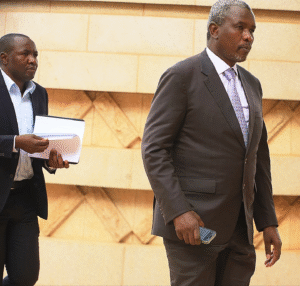
Yet resistance is taking shape in unexpected quarters. Retired military leaders and senior civil servants have issued a strongly worded petition addressed to the Speaker of Parliament. Signed by Henry Muchena on behalf of ex combatants and retired generals, the document is clear in its warning. It condemns the proposed amendments as a direct threat to the principle that power belongs to the people. It demands that Zimbabweans be given the same voice they exercised in 2013, insisting on a referendum as the only legitimate path forward.
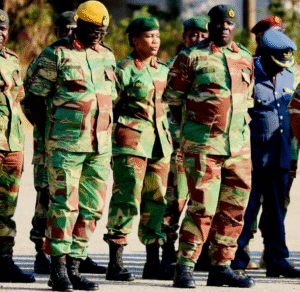
This development exposes deep fault lines within the military political nexus that has defined Zimbabwe since independence in 1980. The army has never been separate from politics. It has been an integral part of ZANU PF governance. Figures like Solomon Mujuru helped entrench that relationship in the early years, while Constantino Chiwenga reinforced it during the events of 2017 that reshaped the country’s leadership. Now, elements from both these historical networks appear to be converging in opposition to a president they once supported.
Mnangagwa now finds himself navigating one of the most serious internal crises of his presidency. In seeking to shape his legacy through electoral and governance reforms, he is encountering resistance from the very security establishment that enabled his rise to power. This is a dangerous position for any leader, especially in a system where political authority has long depended on military backing.
The convergence of these factions signals something profound. The once solid alliance between the ruling party and the defence establishment is beginning to erode. What was once a monolithic structure is now showing visible cracks, and those cracks are widening under the pressure of competing ambitions and constitutional manipulation.
As public consultations continue, uncertainty hangs over the outcome. The intervention by retired generals has injected new tension into an already volatile environment. Whether their actions will succeed in halting the amendments or merely delay them remains to be seen.
What is clear, however, is that Zimbabwe is being tested. The resilience of its constitutional order is under strain, and the limits of presidential power are being pushed in ways that could redefine the country’s future. When power begins to turn inward, when allies become opponents, and when the people are sidelined in decisions that shape their nation, the system does not stabilize. It begins to break.