MNANGAGWA DECLARES PROGRESS, BUT ZIMBABWE DEMANDS MORE THAN NUMBERS
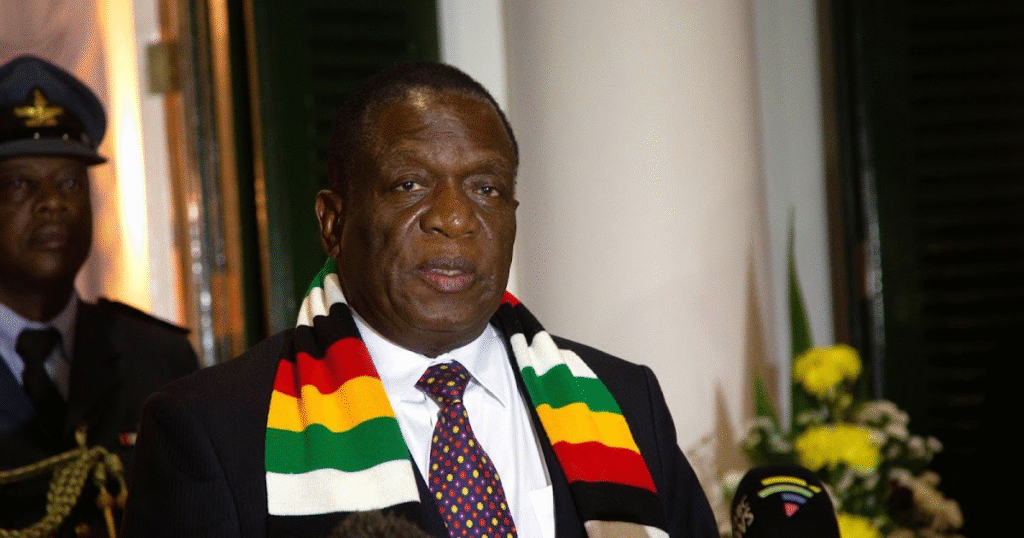
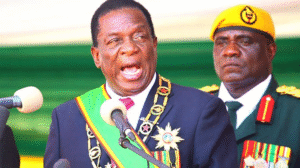
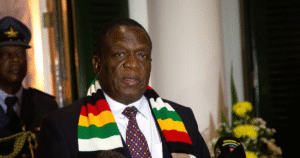
President Emmerson Mnangagwa used his latest State of the Nation Address to paint a picture of a Zimbabwe firmly marching towards prosperity.
Inflation is down. Foreign currency is flowing. Electricity supplies have improved. Roads are being rehabilitated. Lithium is being processed locally. International football has returned to the National Sports Stadium. Zimbabwe is heading to the United Nations Security Council.
Taken individually, several of those developments are real and deserve to be acknowledged.
But a State of the Nation Address cannot simply be a catalogue of favourable statistics and government projects. It must answer a much more important question.
What is the actual state of the nation for the ordinary Zimbabwean?
That is where Mnangagwa’s triumphant account deserves much deeper scrutiny.
The President celebrated inflation falling to single digit levels. Official statistics support the dramatic decline in inflation during 2026. That is unquestionably preferable to the instability Zimbabweans have endured repeatedly over the years.
But low inflation does not mean prices have become low.
It means prices are increasing more slowly.
For a worker whose salary has already been battered by years of currency instability, for a pensioner trying to survive, for a family paying school fees, rent, transport and groceries, the difference is fundamental.
You cannot eat an inflation rate.
Economic stability becomes meaningful when households can feel it in their purchasing power, savings and quality of life.
The same caution is necessary when examining Mnangagwa’s celebration of US$10.7 billion in foreign currency inflows during the first half of 2026.
The figure sounds spectacular.
But what exactly is that money?
Government’s own mid year figures show that the overwhelming majority came from export receipts, followed by diaspora remittances. Foreign direct investment represented only a small fraction of the total.
That distinction matters.
Money sent home by Zimbabweans working in Britain, South Africa, Australia, the United States and elsewhere should not casually be transformed into evidence of the government’s economic success.
There is an uncomfortable irony in celebrating diaspora remittances without confronting why so many Zimbabweans had to leave the country in the first place.
Every dollar sent home represents economic activity, yes. But many of those dollars also represent a son, daughter, nurse, teacher, engineer, accountant or other professional earning abroad because opportunities at home were inadequate.
Remittances can sustain an economy.
They cannot substitute for building one that allows its citizens to prosper at home.
Zimbabwe’s dependence on the United States dollar also remains an important part of the economic picture. A government celebrating macroeconomic stability must still explain why confidence in the domestic currency remains an unfinished project and why the economy continues to depend heavily on foreign currency.
There is progress.
There are also deep structural weaknesses.
Both realities can exist at the same time.
Mnangagwa also declared that frequent load shedding is now a thing of the past.
Electricity supply has undoubtedly improved substantially, and that should be recognised. Reliable electricity matters enormously to households, factories, mines, hospitals and small businesses.
But this is where the political language of the SONA becomes revealing.
Every improvement is presented as evidence of the success of the Second Republic.
Every unresolved problem seems to disappear from the picture.
That is not what a serious State of the Nation Address should be.
A government that has ruled for years should not only tell citizens what has improved. It should tell them what has failed, what remains broken, what targets have been missed and why.
Accountability begins where political advertising ends.
The President spoke proudly about roads, airports, railways and other infrastructure projects.
Again, infrastructure matters.
Zimbabwe desperately needs modern roads, functioning railways, reliable energy, efficient border infrastructure and competitive airports.
But announcing that roads are “targeted” for completion is not the same as completing them.
Promising upgrades is not the same as delivering them.
The test must always be outcomes.
Zimbabweans have heard development promises from successive ZANU PF administrations for decades. Every new programme arrives with slogans, launch ceremonies, speeches and ambitious deadlines.
Citizens are entitled to ask what happened to yesterday’s promises before being asked to celebrate tomorrow’s.
The President also celebrated Zimbabwe producing lithium sulphate locally.
Mineral beneficiation is important. Zimbabwe should not remain a country that extracts valuable natural resources, exports them cheaply and imports finished products at significantly greater value.
But mineral wealth raises another question that speeches about production figures frequently avoid.
Who ultimately benefits?
Zimbabwe is enormously rich in gold, platinum, lithium, diamonds, chrome and other minerals.
Yet natural wealth should ultimately be measured by what it does for citizens.
Does mineral wealth produce better hospitals?
Does it finance modern schools?
Does it create decent jobs?
Does it improve infrastructure?
Does it build public savings for future generations?
Does it produce transparent public revenues that citizens can trace?
A country cannot simply celebrate the extraction and processing of minerals while avoiding questions about ownership, transparency, taxation, environmental consequences and the distribution of the wealth generated.
The President’s silence on some of Zimbabwe’s deeper institutional problems was therefore as important as what he chose to celebrate.
There was little in this optimistic national portrait capable of capturing the profound political arguments currently taking place over constitutional changes, presidential power and Zimbabwe’s democratic future.
This matters because development is not merely roads and GDP figures.
Governance is development.
Accountability is development.
Strong institutions are development.
Constitutionalism is development.
A country cannot measure progress only by kilometres of asphalt while ignoring the quality of its democracy.
That contradiction has become particularly important following recent constitutional changes that have significantly altered Zimbabwe’s political architecture.
A government cannot ask citizens to celebrate Vision 2030 while avoiding legitimate questions about who will govern until 2030, how political power is being structured and whether constitutional changes strengthen citizens or incumbents.
Mnangagwa’s repeated declaration that his government is “leaving no one and no place behind” must therefore be tested against reality rather than applause inside Parliament.
Who exactly is being left behind?
The patient who reaches a public health institution and cannot obtain the medicine required is part of the state of the nation.
The teacher worried about wages and working conditions is part of the state of the nation.
The graduate unable to secure decent formal employment is part of the state of the nation.
The pensioner watching years of savings lose value is part of the state of the nation.
The informal trader struggling simply to survive is part of the state of the nation.
The Zimbabwean living abroad because home could not provide sufficient opportunity is part of the state of the nation.
They cannot disappear simply because a presidential speech contains impressive numbers.
Zimbabwe’s election to a non permanent seat on the United Nations Security Council for 2027 and 2028 is significant. It gives the country an important international platform and responsibility.
But international recognition should also sharpen the conversation about governance at home.
A country seeking to participate in decisions about international peace, security and the rules based global order should be equally serious about strengthening accountable institutions domestically.
The central weakness of Mnangagwa’s SONA was therefore not necessarily that everything he said was false.
That would be an easy argument, and an inaccurate one.
Inflation has fallen.
Electricity supply has improved.
Foreign currency receipts have increased.
Infrastructure projects are underway.
Zimbabwe has secured its Security Council seat.
Those facts should not be denied merely because they are politically convenient to ZANU PF.
The deeper criticism is more powerful.
Mnangagwa presented selected improvements as though they amounted to a comprehensive verdict on the condition of Zimbabwe.
They do not.
His government still presides over an economy carrying enormous public debt. Zimbabwe still faces the unfinished challenge of rebuilding confidence in its own currency. Public services remain under pressure. Questions around governance, transparency, political accountability and constitutional power remain unresolved.
After decades of ZANU PF rule, Zimbabweans are entitled to demand more than another presidential declaration that prosperity is approaching.
The country should be judged not by the confidence of a speech, but by the strength of its institutions and the lived experience of its citizens.
The National Sports Stadium reopening is welcome.
Better electricity is welcome.
Lower inflation is welcome.
Road rehabilitation is welcome.
Mineral beneficiation is welcome.
But none of these achievements gives any government immunity from scrutiny.
Nor should legitimate progress be converted into political permission for the concentration of power.
A State of the Nation Address should not ask Zimbabweans to admire the government’s preferred version of the country.
It should confront the whole country.
The achievements.
The failures.
The uncomfortable statistics.
The struggling institutions.
The people who have benefited.
And those who remain behind.
Mnangagwa told Parliament that Zimbabwe’s trajectory remains upward.
The more important question is not whether the graph points upward on a government presentation.
It is whether Zimbabweans themselves can feel that rise in their wages, hospitals, schools, businesses, freedoms, institutions and everyday lives.
Until that question can be answered convincingly, the State of the Nation cannot be reduced to a victory speech.