FIRST 2030, NOW 2035: ZIMBABWE MUST STOP TREATING MNANGAGWA’S FOREVER-RULE TALK AS A JOKE
Zimbabweans have heard this story before.
A leader talks about remaining in power longer than expected. Supporters laugh. Party officials applaud. Critics are accused of overreacting. The suggestion is presented as harmless political banter.
Then, slowly, the machinery of the state begins moving in precisely that direction.
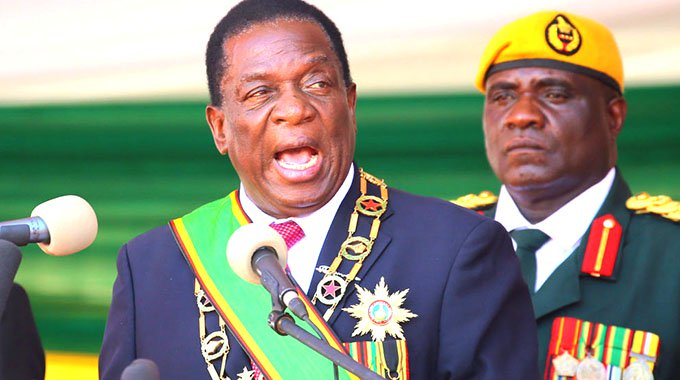
That is why President Emmerson Mnangagwa’s latest remarks about still being around when the Sanganai/Hlanganani Tourism Expo returns to Masvingo in nine years should not simply be dismissed as another joke from an ageing politician.
Nine years from 2026 is 2035.
Only months ago, Zimbabwe’s constitutional order was changed through Constitutional Amendment No. 3. Presidential and parliamentary terms were extended from five years to seven years, pushing the current political timetable from 2028 to 2030. Future presidents will also be chosen by Parliament rather than directly by voters.
Now, before the dust has even settled on those extraordinary changes, Zimbabweans are already hearing 2035.
That should alarm anyone who believes political power must have limits.
Mnangagwa has not produced a constitutional proposal allowing him to remain President until 2035. Under the present framework, further constitutional changes would be necessary for him personally to continue beyond the already extended horizon.
But that is precisely the point.
Zimbabweans should not wait for another Bill to appear in Parliament before taking the political direction seriously.
CAB 3 has already demonstrated that what appears politically outrageous today can become constitutional architecture tomorrow.
Before CAB 3, Zimbabweans expected national elections in 2028.
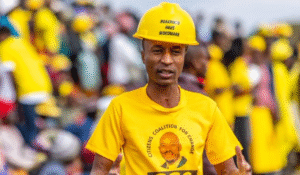
Then ZANU PF began campaigning for Mnangagwa to remain until 2030.
The idea was promoted at party gatherings. Resolutions followed. Political messaging intensified. What initially looked like another ruling-party slogan eventually became a constitutional amendment.
Today, 2030 is no longer merely a ZANU PF chant.
It has been written into Zimbabwe’s political timetable.
That experience should have taught the country something.
When those controlling the state repeatedly tell Zimbabweans that political horizons should move, dismissing them as unserious is dangerous.
Mnangagwa’s Masvingo remark matters precisely because it moves the conversation again.
Yesterday the argument was 2028.
Then it became 2030.
Now Zimbabweans are discussing 2035.
Some ruling-party-aligned voices have even floated 2037.
Where exactly does this end?
The danger is not that Zimbabwe has suddenly become a monarchy. It has not.
The danger is the gradual normalisation of open-ended incumbency.
Every extension makes the next discussion easier.
Every constitutional alteration weakens the psychological barrier that previously made another alteration seem impossible.
And every time Zimbabweans are told, “It is only talk,” the political ground shifts a little further.
This is how constitutional restraint can be eroded without announcing the death of democracy in a single dramatic moment.
Robert Mugabe’s 37-year rule should have permanently cured Zimbabwe of the idea that one individual is indispensable to the state.
Instead, less than a decade after Mugabe’s removal, the country is once again being asked to organise its political future around the longevity of one man.
There are obvious differences between Mugabe and Mnangagwa, and history should not be reduced to a lazy comparison.
But there is an uncomfortable continuity in ZANU PF’s political culture.
The party repeatedly struggles to separate the state from the individual leading it.
Under Mugabe, party loyalty became intertwined with loyalty to the President. Institutions weakened around personalised authority. Succession became dangerous precisely because the system had been constructed around one dominant figure.
Zimbabwe eventually reached the absurd position where the political future of millions of people revolved around whether one elderly man would voluntarily surrender power.
Why should the country walk down that road again?
Mnangagwa came to power in November 2017 after the military intervention that ended Mugabe’s rule.
Zimbabweans were promised a “new dispensation.”
Yet the most important democratic lesson from Mugabe’s era appears to have been ignored: no president should become bigger than the institutions governing the country.
Instead of strengthening constitutional limits, Zimbabwe is once again debating how much longer the incumbent can remain.
Instead of building predictable succession, ZANU PF is fighting internally over who inherits power.
Instead of allowing citizens to determine presidential leadership directly, CAB 3 has shifted future presidential selection into Parliament.
And instead of preparing the country psychologically for political transition, Mnangagwa is publicly associating himself with dates beyond even the newly extended 2030 horizon.
That is not healthy constitutional politics.
ZANU PF may argue that continuity is necessary for Vision 2030, infrastructure development and economic planning.
But countries do not need presidents-for-life to pursue long-term policies.
Functional states build institutions capable of surviving individual leaders.
Road projects do not require permanent presidents.
Investment strategies do not require permanent presidents.
National development plans do not require permanent presidents.
Strong institutions provide continuity precisely because political leaders are temporary.
If Zimbabwe’s development programme collapses whenever Mnangagwa leaves State House, then the problem is not succession. The problem is that ZANU PF has failed to build institutions stronger than one individual.
There is another danger.
Repeatedly postponing succession does not eliminate the succession struggle. It merely pushes it forward while increasing the stakes.
Vice-President Constantino Chiwenga and other potential contenders do not disappear because the incumbent remains longer.
Factional interests do not disappear.
Ambitions do not disappear.
Political uncertainty does not disappear.
They accumulate.
Zimbabwe therefore risks sacrificing constitutional certainty in the name of political stability while producing precisely the opposite.
And the opposition must understand what is happening.
Treating every statement about extended rule as comedy is not a strategy.
The constitutional terrain has already changed once.
The presidential electoral system has changed.
The length of political terms has changed.
The composition of the Senate has changed.
The rules governing Zimbabwe’s political future are demonstrably capable of being rewritten when the parliamentary numbers exist to rewrite them.
That does not mean another amendment is inevitable.
It means complacency is reckless.
Mnangagwa’s defenders can say he was joking in Masvingo. Perhaps he was.
But Zimbabwe should no longer build its constitutional future around hoping that the President does not mean what he says.
The burden should be the opposite.
A president serving his final constitutional tenure should be preparing institutions for succession, reassuring citizens that constitutional limits will be respected and demonstrating that Zimbabwe can survive perfectly well without him.
Instead, the political horizon keeps moving.
2028 became 2030.
Now 2035 has entered the conversation.
And 2037 is already being whispered in some political circles.
Zimbabwe must reject the idea that the country requires the permanent supervision of one man or one party.
Mnangagwa is not Zimbabwe.
ZANU PF is not Zimbabwe.
No liberation history, development programme, parliamentary majority or political slogan gives any leader ownership of the country’s future.
Zimbabwe existed before Emmerson Mnangagwa became President, and it will exist after he leaves office.
The Constitution should guarantee that transition rather than repeatedly being adjusted around the political interests of incumbents.
The question Zimbabweans should therefore be asking is no longer whether Mnangagwa’s 2035 remark was a joke.
The more important question is this:
How many times must the political horizon move before Zimbabwe finally accepts that every attempt to extend presidential power must be confronted before it becomes another constitutional fait accompli?