CAB 3 IS NOT ABOUT THE CONSTITUTION , IT IS ABOUT KEEPING ZANU PF IN POWER
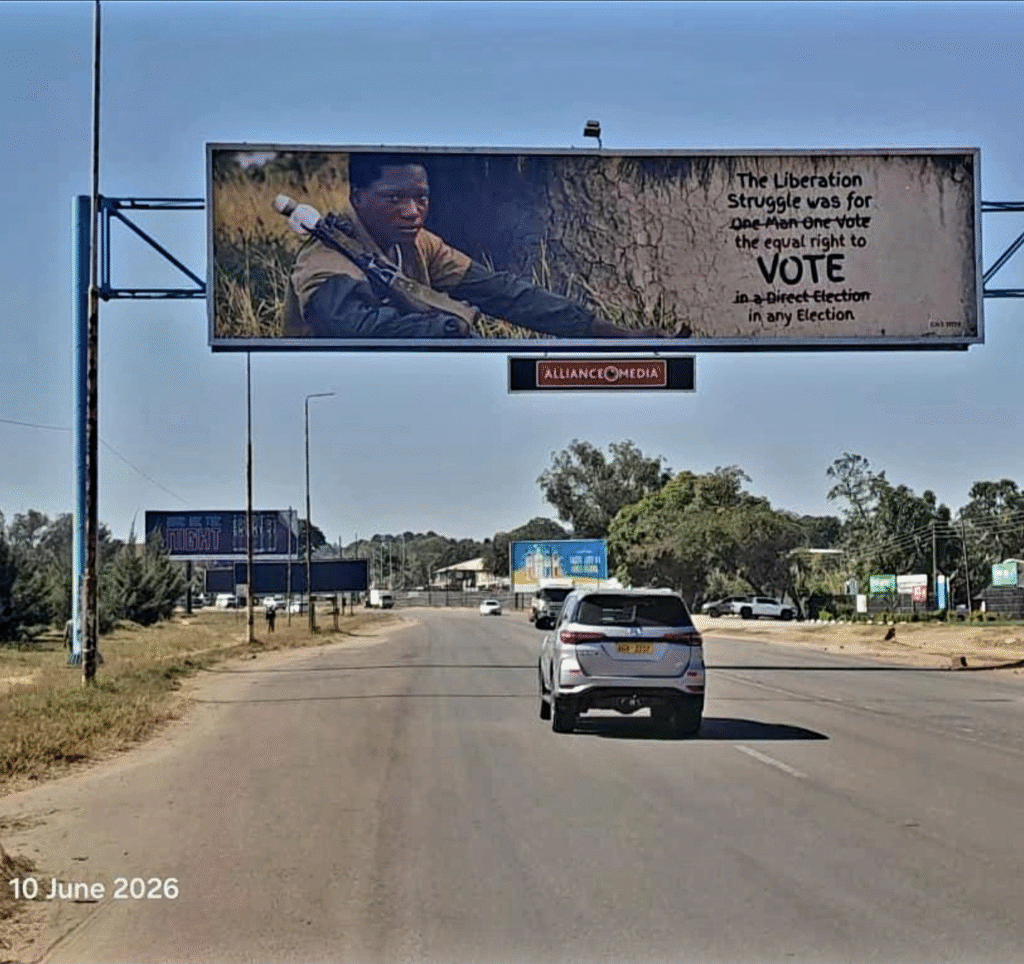
For months, Zimbabweans have been told that Constitutional Amendment Bill No. 3 (CAB 3) is merely a technical constitutional adjustment. Its defenders insist that critics are misreading the law and failing to appreciate the distinction between term limits and term lengths. Through billboards, media campaigns and public statements, supporters of the proposal have attempted to portray the debate as a simple matter of constitutional interpretation.
But that narrative deliberately avoids the real issue.
The controversy surrounding CAB 3 has never been about legal semantics. It has always been about political power. It is about whether Zimbabwe’s leaders should be allowed to alter the rules of democratic accountability in ways that benefit themselves while ordinary citizens continue to struggle with worsening economic conditions, unemployment, corruption and collapsing public services.
Supporters of CAB 3 often point to Section 328(7) of the Constitution, arguing that it only prevents incumbents from benefiting from amendments to term-limit provisions. According to this argument, extending the duration of an existing term is legally different from removing or altering a term limit. They insist that critics are reading into the Constitution words that do not exist.
Yet this argument misses the broader constitutional purpose entirely.
The Constitution is not a collection of isolated clauses waiting to be exploited by politicians seeking to remain in office longer. It is a democratic covenant between the state and its citizens. Its primary purpose is to regulate power and prevent its abuse. Every constitutional provision must therefore be interpreted in a manner that strengthens democratic accountability, not weakens it.
The fundamental question is simple. Why should elected officials remain in office beyond the period for which voters elected them?
Zimbabweans participate in elections with the understanding that public office is held for a specific period before citizens are given another opportunity to renew or withdraw their mandate. Elections are not administrative inconveniences that can be postponed whenever those in power find them politically inconvenient. They are the foundation of democratic legitimacy.
When politicians begin searching for constitutional loopholes that allow them to stay in office longer, alarm bells should immediately ring.
This is particularly true in Zimbabwe, where constitutional amendments have too often been driven by political calculations rather than national interests. Citizens have repeatedly witnessed attempts to manipulate institutions, weaken democratic safeguards and concentrate power in the hands of a small political elite. Against that background, it is impossible to separate CAB 3 from the broader push to extend ZANU PF’s dominance over the political system.
The timing itself raises serious questions.
Zimbabwe is facing enormous challenges. Hospitals lack essential resources. Young people struggle to find employment. Businesses continue to battle economic uncertainty. Corruption scandals regularly dominate public discourse. Yet instead of focusing national attention on solving these urgent problems, political energy is being invested in constitutional changes that primarily benefit those already holding office.
That reality alone should concern every citizen.
If CAB 3 were genuinely about improving governance, there would be widespread public demand for it. There would be national consultations driven by ordinary Zimbabweans. Instead, the loudest voices supporting the proposal are political figures and institutions closely aligned with the ruling party.
The debate therefore goes far beyond the wording of a single constitutional subsection. It concerns the future of democratic accountability in Zimbabwe. It concerns whether citizens retain the power to regularly judge their leaders at the ballot box or whether politicians can continuously redesign the rules to suit their own interests.
The defenders of CAB 3 may continue arguing about technical distinctions between term lengths and term limits. Lawyers can debate constitutional language endlessly. But ordinary Zimbabweans understand the practical reality. Any proposal that delays elections, extends political terms or reduces opportunities for public accountability benefits those in power and weakens the authority of voters.
The Constitution was written to protect citizens from the abuse of power. It was not written to provide political cover for those seeking to extend their stay in office.
CAB 3 is therefore not simply a constitutional amendment. It represents a dangerous attempt to normalise the idea that politicians can alter democratic timelines whenever it suits them. Zimbabweans should reject that logic completely.
The future of the country cannot be determined by legal gymnastics designed to entrench political power. It must be determined by the people themselves through free, regular and meaningful elections.
That is what democracy demands. That is what the Constitution was meant to protect. And that is precisely why CAB 3 deserves to be resisted.