POWER WITHOUT EXIT IS A DANGEROUS ILLUSION
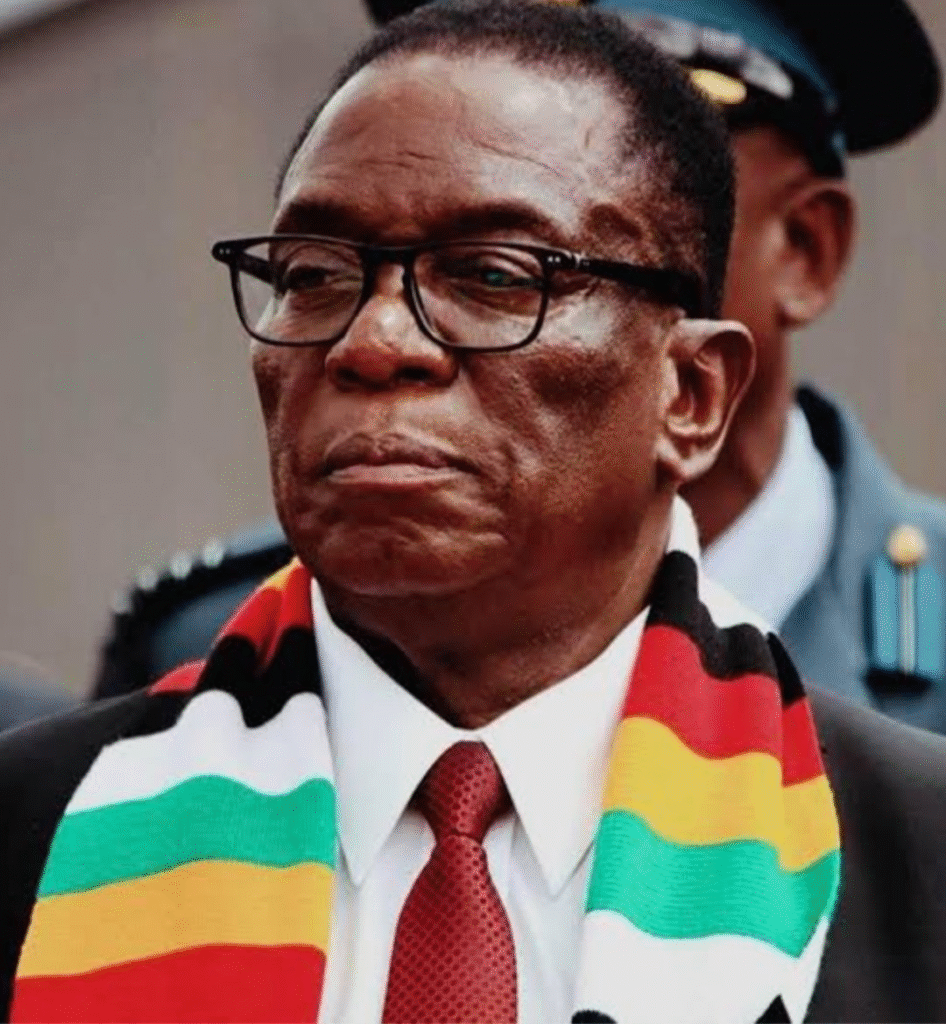
Even an attempted coup in response is too grave to contemplate in such a context, yet the current trajectory of governance in Zimbabwe is pushing the nation toward precisely such dangerous edges. What is presented as a constitutional maneuver is, in reality, a high stakes gamble with the country’s fragile political balance. Beneath the surface, the regional mood is far less supportive than official rhetoric suggests.
From engagements across Southern Africa, there is a quiet but unmistakable discomfort within former liberation movements such as the African National Congress in South Africa, SWAPO in Namibia, FRELIMO in Mozambique, and Chama Cha Mapinduzi in Tanzania. While these parties publicly invoke sovereignty to justify non intervention, internally they recognize the risks associated with blocking leadership renewal. They have learned, often through hard experience, that leadership renewal is central to regime durability and long term survival.
The African National Congress understands the importance of transitions, including the inevitability of President Ramaphosa eventually exiting the political stage. FRELIMO has historically rotated leadership across generations, while SWAPO has also managed succession with relative stability. Even Chama Cha Mapinduzi, despite its authoritarian tendencies, continues to alternate leadership, albeit without deepening democratic practice. None of these parties advocate for regime change in Zimbabwe, yet they struggle to comprehend ZANU PF’s apparent commitment to stagnation, especially given its clear potential to trigger instability.
The implications of the proposed Bill are severe. If pursued, it will deepen fractures within ZANU PF itself, intensify political tensions nationwide, and trigger cycles of repression and resistance. The economic consequences will follow swiftly, as the already fragile social contract weakens further. Zimbabwe’s isolation will deepen, and investor confidence will erode even more. This is not a stabilizing measure. It is a destabilizing gamble with far reaching consequences.
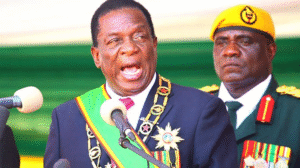
One cannot move from a military coup to a constitutional coup and expect smooth political survival. Emmerson Mnangagwa is officially 83 years old, though some of his contemporaries argue he may be closer to 88. At either age, prolonging power does not resolve the question of succession. Instead, it deepens the crisis, shifting the struggle into less predictable and potentially more volatile forms.
Even within the establishment, warning signs are increasingly visible. At a ZANU PF press conference on 20 February 2026, spokesperson Christopher Mutsvangwa openly suggested that Mnangagwa has witnessed the consequences of aging leadership and should take a cue from Robert Mugabe. Though his tone may shift with political winds, the underlying message is difficult to ignore. Dr Siphosami Malunga also cautioned that age can alter power dynamics in unpredictable ways. Today one may appear invincible, tomorrow diminished, and only time determines that transition.
Attempts to extend power under such conditions do not secure stability for the system or the nation. Instead, they heighten uncertainty and risk.
This brings Zimbabwe to a deeper parliamentary crisis. The very institution meant to check executive overreach is now poised to determine the fate of this Bill. Constitutionally, ZANU PF does not possess an automatic two thirds majority in both Houses. While it controls the National Assembly, the Senate presents a more complex challenge, where it holds 33 out of 80 seats and requires 21 more to reach the critical threshold of 54.
The arithmetic reveals a rarely discussed possibility. Only 27 votes are needed to block the Bill in the Senate. These could theoretically come from the 47 non ZANU PF Senators, including 27 CCC members, 18 traditional leaders, and 2 representatives of persons with disabilities. On paper, this makes the Senate a potential arena of genuine contestation.
Yet political reality complicates this picture. Parliament is effectively captured. Many traditional leaders display clear partisan alignment, and recalls of opposition MPs have already reshaped representation, reinforcing compliance and weakening independent judgment. In other countries, recall mechanisms serve as citizen driven accountability tools with strict safeguards. In Zimbabwe, they have become instruments of both party and state control.
Ultimately, many MPs may support the extension, not out of principle, but because it prolongs their own tenure. In such a system, self preservation often outweighs national interest, leaving the future of Zimbabwe hanging in a precarious and uncertain balance.